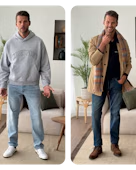
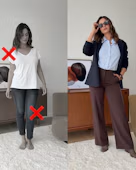
You try on a jumper in a colour you love, but something about the shape leaves you unsure. Would a shorter cut feel better? A softer knit? Or would you prefer it with a different pair of trousers? Understanding your proportions can help you answer those questions. It gives you a starting point for choosing clothes, alongside your taste, your plans and how you like to feel in an outfit. This guide to how to dress for your body shape starts with a simple test, then takes you through clothing ideas you can make your own. You may recognise yourself in one silhouette, or find that two come close. Both are useful.
Start with your proportions
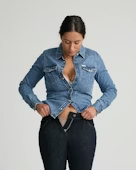
To determine your body shape, look at the relationship between your shoulders, waist and hips. Stand naturally in front of a full-length mirror, wearing something that lets you see your outline. Notice whether your shoulders and hips look roughly aligned, which appears wider, and how defined your waist looks between them.
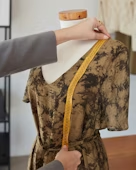
Measurements can help if you are unsure. Our guide to taking your measurements explains how to measure your bust, waist and hips with a tape held comfortably against your body.
Keep the comparison consistent: a width seen from the front and a circumference measured around the body are different things. Do not compare a shoulder-width measurement with a hip circumference. For the test below, use your overall outline rather than trying to meet an exact numerical threshold.
Which body shape sounds most like you?
Use this body shape test as a guide to familiar styling categories. Read the descriptions as a whole rather than letting one answer decide everything.
1. Do your hips look wider than your shoulders?
You may recognise an pear or triangle silhouette (sometimes called A). Your lower body appears broader than your upper body, whether or not your waist is strongly defined.

2. Do your shoulders look wider than your hips?
You may be closer to a inverted triangle silhouette (sometimes called V). Your shoulder line is the broader part of your outline.
3. Do your shoulders and hips look roughly aligned?
Look at your waist next. A less defined waist may point towards an rectangle silhouette (sometimes called H). A more defined waist may suggest an hourglass silhouette (sometimes called X). You may also see the term 8, often used for an hourglass outline with fuller curves. These labels overlap; you do not need to settle the distinction to use the styling ideas.
4. Is the middle of your silhouette the fullest area, with less definition at the waist?
You may recognise an oval or apple silhouette (sometimes called O). If this description feels closer than the others, start there, even if your shoulders or hips also share features with another profile.
These female body shapes are broad reference points. They do not describe every detail that affects fit, such as bust fullness, torso length or the way a particular fabric sits on you.
What if you recognise yourself in two results?
Perhaps your shoulders and hips look aligned, but neither the H nor the X description quite fits. Or you recognise the proportions of an A silhouette alongside a fuller middle.
You can borrow ideas from both. Pay attention to the clothing question you actually want to solve: finding trousers with enough room through the hips, choosing a neckline you enjoy, or wearing a roomy knit without losing the shape of your outfit.
The most useful result is a clearer idea of what to try next. You do not need a perfect label before you can get dressed.
From your result to clothes you’ll enjoy wearing
Learning how to dress for your body shape becomes more useful when you connect it with your own preferences. You might enjoy emphasising your shoulders, following your natural waist or wearing a relaxed line from top to bottom. Each is a valid starting point.
Pear shape: choose where you want the detail
A textured jumper, a boat neckline or a patterned scarf can bring attention to your upper body if that is an effect you like. Pairing one with a simpler trouser gives the detail space to stand out.
Picture an ecru cable knit with dark straight-leg jeans, brown suede boots and a burgundy scarf. For a quieter look, swap the cable knit for fine merino.
You can also make your lower half the focus with coloured trousers or a printed skirt. Your silhouette does not decide where you are allowed to wear colour.

Inverted triangle: explore movement below the waist
Wide-leg trousers, an A-line skirt or a fluid midi can introduce a fuller line below the waist. A simple knit alongside them lets you enjoy that contrast without adding much styling effort.
For dinner, a navy V-neck jumper with a softly pleated skirt and knee-high boots makes a warm alternative to a dress. If you love a strong shoulder, keep it: a structured blazer can be part of your style too.
Rectangle shape: follow a straight line or add definition
A rectangle silhouette gives you different directions to explore. A straight coat over a fine knit and tailored trousers can feel beautifully understated. You might prefer that easy line to anything cinched.
On days when you want more waist definition, experiment with a wrap top, a shorter cardigan or a loose front tuck. Try the same trousers with two different knit lengths and see which combination feels more like you.
Hourglass shape: decide how closely clothes follow your curves
If you enjoy emphasising your waist, wrap shapes, shaped jackets and knits that sit near the body are useful options. Choose enough room through the bust and hips so the garment can follow your outline comfortably.
A chocolate wrap knit with charcoal trousers and ankle boots makes an easy work outfit. A relaxed jumper can be just as appealing; you could pair it with a straighter skirt, or enjoy the softness of a looser outfit throughout.
Oval or apple shape: pay attention to fabric and drape
A knit with a soft drape, a comfortably cut straight-leg trouser or an open cardigan may give you the movement you want. Compare fabrics as well as sizes: two jumpers in the same cut can sit very differently if one is stiff and the other supple.
For a winter weekend, consider an open camel cardigan over an ivory top, with dark denim and suede boots. If you prefer a cropped jacket or a more fitted dress, let that preference guide what you try.
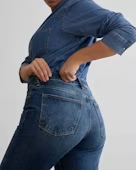
For more detail on denim cuts, explore our guide to choosing jeans for your body shape.
Let your personal style lead
Once you have a few ideas, try them with clothes you already own. Change one thing: the length of a knit, the shape of a trouser, or whether a jacket is open or fastened. Notice what you enjoy about the result.
Knowing how to dress for your body shape can narrow down the options, but your favourite clothes should still feel like yours. Keep the colour you love, the roomy jumper you reach for and the details that make an outfit interesting to you.
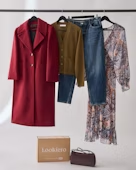
If you would like help exploring those choices, a Lookiero Personal Shopper selects clothes around your style, needs and preferences. You can try them at home and only pay for what you keep, giving you space to discover which cuts and combinations you enjoy wearing.